The Story
DuckMath started in October 2021 when I was 16 years old, a junior at Brebeuf Jesuit Preparatory School in Indianapolis. I saw someone younger than me on TikTok who had built an unblocked games site and thought "I can do that." The thing is, I had barely coded before. But I started anyway.
What began as a simple unblocked games site turned into a platform hosting 250+ browser-based games across categories like Multiplayer, Flash, Emulator, Platformer, Puzzle, Sports, and more. The whole point was simple: give students a way to play games at school when everything else was blocked.
I worked on it 5-30 minutes a day for years. No grand plan, no investors, no team. Just me, iterating constantly, learning by doing. As I like to say: "I learned through doing mostly."
By The Numbers
The $240 Day
For three years DuckMath grew slowly. I'd tweak the design, add games, fix things that broke. Then in December 2024, the site earned $240 in a single day. That was the moment everything changed. I was working an internship at the time and I realized this little side project had more potential than I'd ever given it credit for. I left the internship and went all-in.
The Marketing Machine
Growth didn't happen by accident. I built a content machine: 12 short-form videos per day across TikTok, YouTube Shorts, Instagram Reels, and Snapchat. I used an auto-upload platform to distribute content simultaneously across all platforms. The formula was simple - videos like "how to play X game in school" with DuckMath as the answer.
I constantly analyzed what content hit and iterated on the formula. The result? In August 2025, the site went from 5,000 to 150,000 daily active users in just two weeks.
I wrote up the parts of this that generalise in how to use TikTok as free marketing for a B2C product.
The Journey In Screenshots
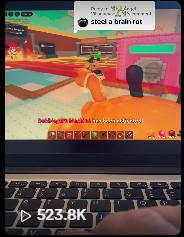
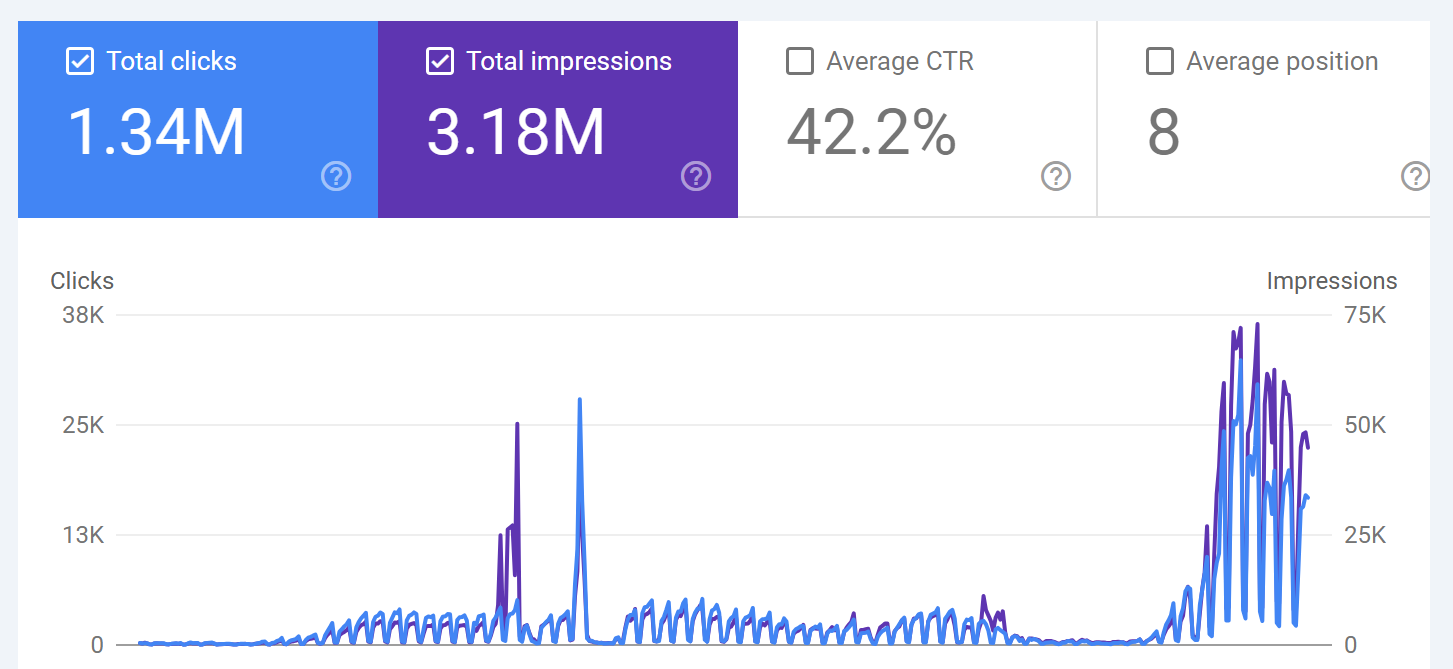
From 1,828 views on my first ever TikTok to 1.7 million views on a single video. SEO was massive too - Google Search Console showed 1.34 million clicks, 3.18 million impressions, and a 42.2% click-through rate.
Tech Stack
DuckMath was intentionally simple. The entire site was HTML, CSS, and JavaScript hosted on GitHub Pages. Games were delivered as browser-based HTML5, Flash emulation, and WebGL. I owned 20+ domains as backups so if one got blocked by a school, students could just go to another. The site also had cloaking tools and proxy integration to bypass filters.
On top of the games, I built a leaderboard system, an in-site economy with coins, a seasonal battle pass, and a Discord proxy. Revenue came from ads - minimal and non-intrusive, but at 150k daily users it added up fast.
The kicker? A full rebuild of the entire site would take me 3-4 days. Simple tech, massive distribution.
The Exit
In November 2025, FreezeNova - a global gaming company that had previously acquired similar sites - reached out. They offered $100K. I countered with $120K. They agreed.
At the time DuckMath was pulling $15,000-$20,000 per month in ad revenue. Selling wasn't about the money running out - it was about wanting to move on. The unblocked games space wasn't where I wanted to build long-term. I had bigger ideas.
The sale was covered by the Purdue Exponent, Inside INdiana Business, WLFI and Current in Carmel. Not bad for something I started as a 16-year-old who could barely code.
What I Learned
DuckMath taught me that distribution beats product. The tech was simple. What made it work was relentless marketing, understanding my audience (students on school Chromebooks), and solving a real problem they had every day.
It also taught me that consistency compounds. Three years of 5-30 minutes a day doesn't feel like much in the moment, but it adds up to something real. When the viral moment came, I was ready because I'd spent years quietly building the foundation.